The ground · January 2025
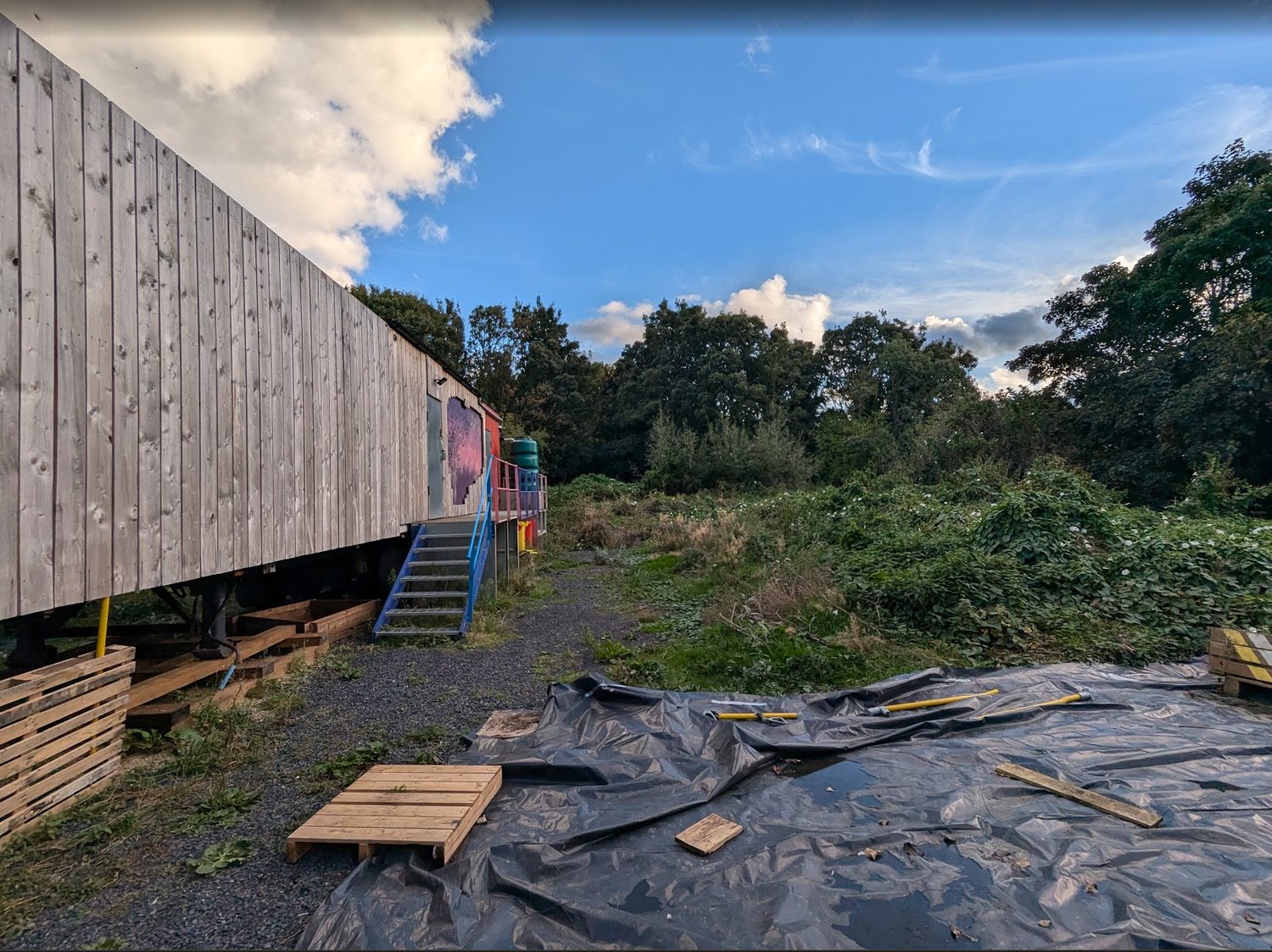
A trailer in an overgrown field
This is what Greenacre looked like when I took it over. The land had been set aside and a trailer put on it. There was nothing wrong with the place. It simply wasn’t being used.
I didn’t found Greenacre. I led the team that activated it.
Eighteen months later the same ground carries a community garden, a mushroom farm, seasonal festivals, an artist in residence, and classes taught by colleagues from across the university.
Late autumn · November 2025
A structure nobody knew how to build
The willow had been growing on a former leaf compost heap — ground the university had stopped thinking about. I invited UCD Landscape Architecture in for an afternoon to see what could be made of it.
In two hours, students who had never woven willow built a living structure and coppiced the rods that would feed its own growth the following summer.
Nobody in the room had done it before, including me. That was the design.
“The gain of student agency and empowerment during 2 hours was pretty impressive.” Sophie von Maltzan · Artist and landscape architect, UCD Landscape Architecture
Autumn into winter · October 2025–January 2026
Coffee in, mushrooms out
The University Club café throws away its coffee grounds. We take them, grow oyster mushrooms on them at Greenacre, and deliver the mushrooms back to the Club kitchen.
Three months from first bucket to first crate, built with a research group from Biosystems and Food Engineering who wanted somewhere real to grow, and students who wanted to know how.
Twelve days after we started, a second group of students built the composting system that would take the spent substrate. The loop had a loop.
Samhain · Halloween · October 2025
Permission to light a fire
The Celtic year turns on fire, so the first Greenacre festival needed one. Getting it took an application, a risk assessment, and the estates and fire safety functions of a university that had not permitted an open fire on campus before.
Around it: glass blowing, puppetry, pumpkin carving, fortune telling, and a lot of people sitting down together in the dark.
Samhain is where Halloween comes from. Holding it on 31 October put the older festival back in front of people who had only ever met the newer one.
The folklore was offered, not taught. People took from it whatever they found useful.
Spring · March–April 2026
A building made of whiskey
Teeling gave us their spent oak barrels. We released the staves, and students clad a new structure in them, working alongside a joinery workshop who brought the craft we didn’t have.
The labour came from the UCD Sustainability Society, out on site on Thursdays through the term.
Most students arrive at university and never build anything. This one has a wall they can point at.
Late winter · February 2026
Paper and mycelium, same afternoon
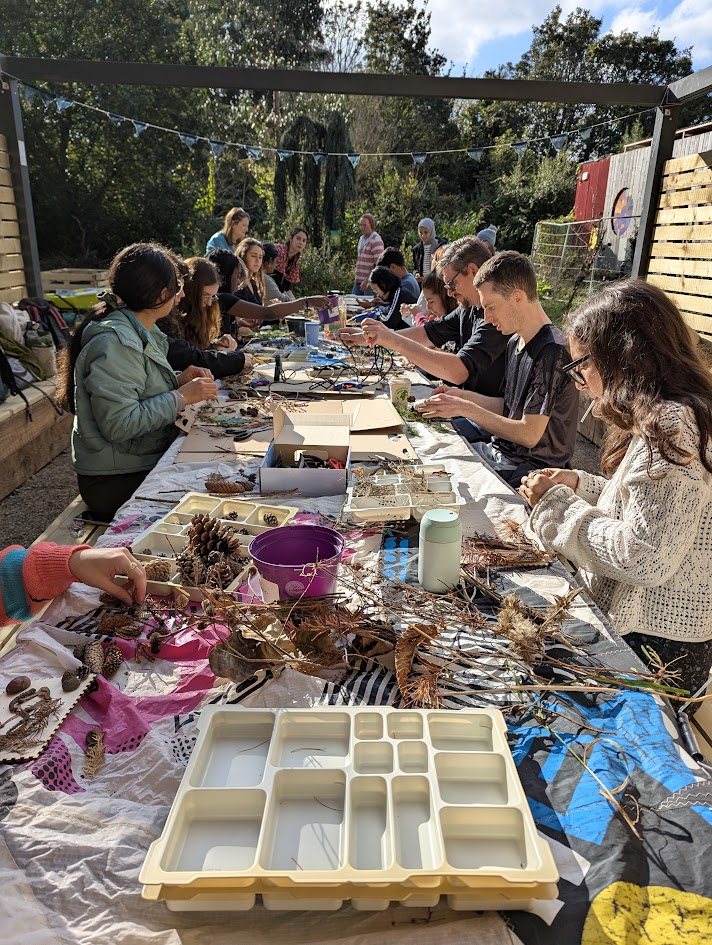
UCD’s Ad Astra Scholars came out on a Saturday. They made paper by hand from pulp, and inoculated mushroom buckets they would come back for in six weeks.
Both halves of the day were led by our artist-in-residence. Neither was decoration for the other.
They named their cultures before they left. Shroomy. Harvey Melvin. Twilight Sparkle. You come back for something you have named.
Bealtaine · April 2026
The day other people programmed
We aligned the Celtic festival of Bealtaine with Earth Day, moved the dates to meet, and then opened the day to the rest of the university: propose something with a Bealtaine or a sustainability flavour, and come and run it.
Colleagues from across UCD filled the schedule. Nutrition and tasting. Ogham writing. An earth song choir. Breathwork. Nature journaling. Tea, cake and gardening.
None of it was ours. That was the whole point of building the place.
Spring · March 2026
A hedgerow, and what students wrote after
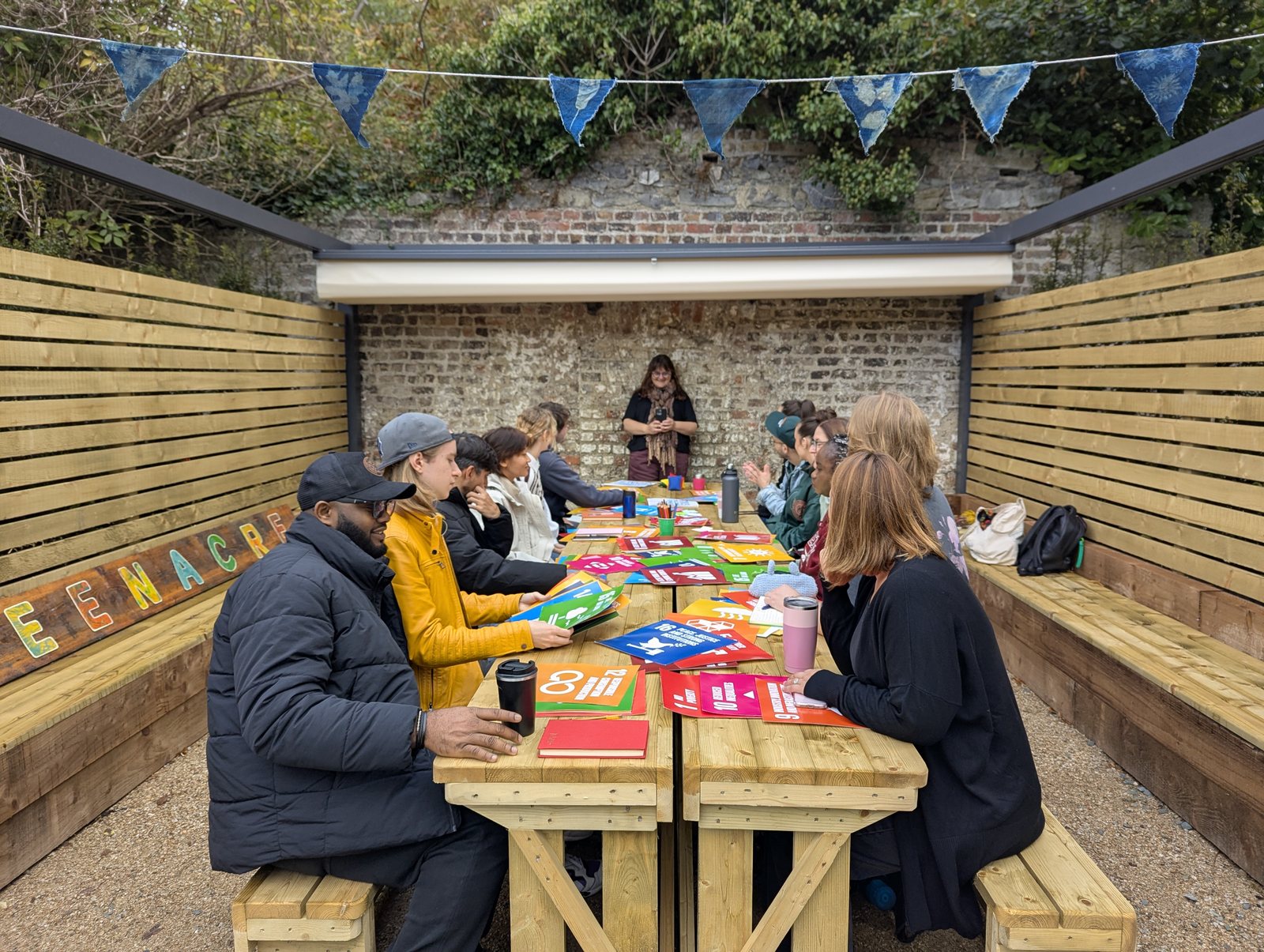
My module, Design a Sustainable Future, went outside. Sophie von Maltzan came back to explain why urban hedgerows matter, and the class planted one. It is still growing.
In their reflections afterwards, students wrote about themselves rather than about hedges. Some said they had not thought of themselves as leaders until that afternoon. Others were simply surprised they could grow anything.
The site does not teach sustainability. It teaches people what they are capable of, and sustainability is what they happen to be holding at the time.
An organising principle · 2025–2026
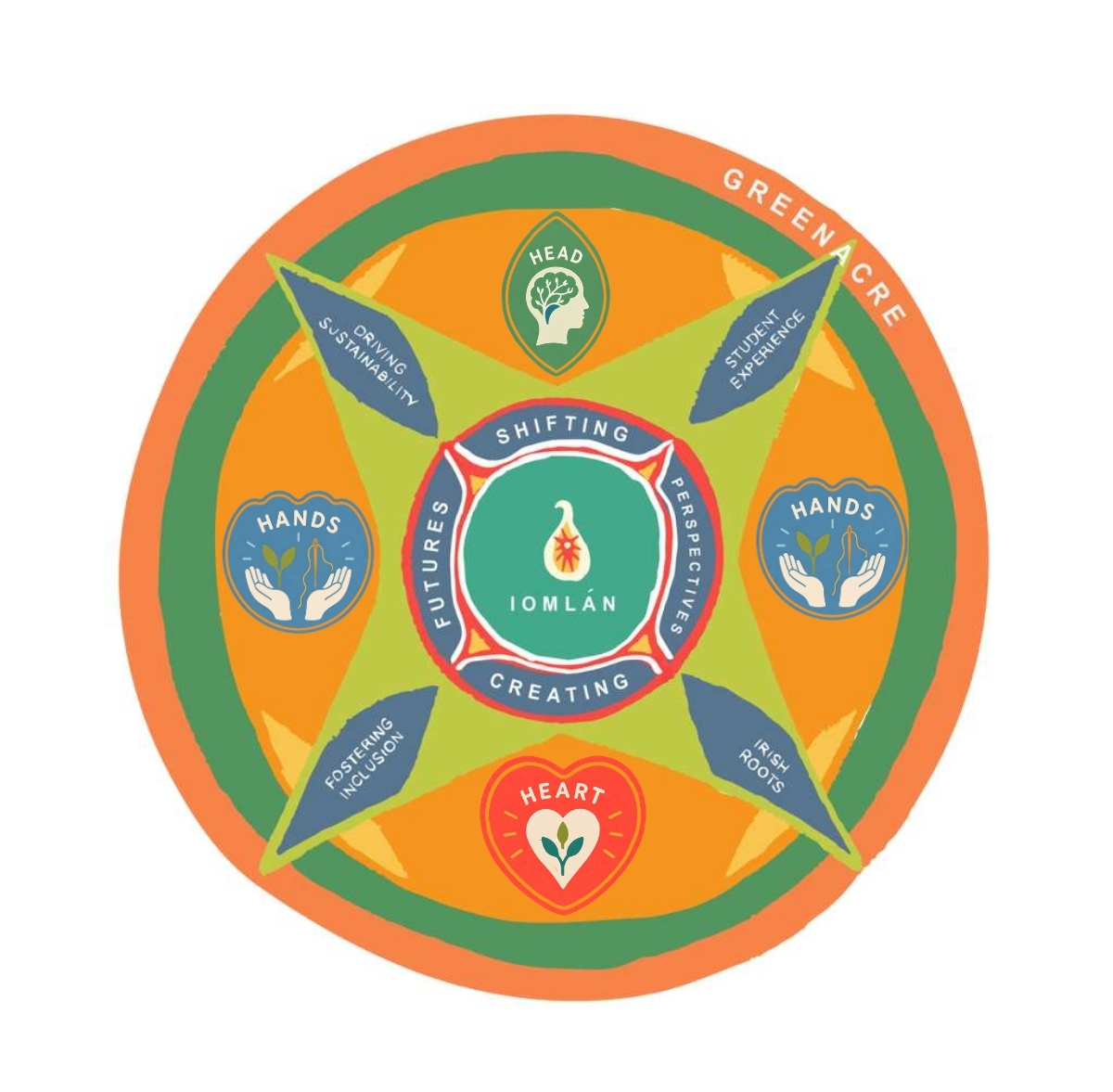
The iterations gave us a compass
Greenacre was built by trying things in public: growing, making, gathering, reflecting, then trying again. University falls at a pivotal point in students’ lives. The question was not only how to teach sustainability, but how to create the conditions in which people could flourish — and recognise their own capacity to shape a more liveable future.
Across those months, those experiments converged into four connected practices. Grow means food, soil and living systems, but also the growth of the individual. Learn builds confidence through experience, reflection and the application of practical skills. Make turns imagination and reclaimed materials into something tangible. Connect brings people across roles and backgrounds into relationship, inclusion and belonging.
They are not separate programmes. They overlap and reinforce one another, creating different ways to enter, contribute and belong. What began as a series of iterations became Greenacre’s organising principle.
Recognition · May 2026
Nominated by colleagues
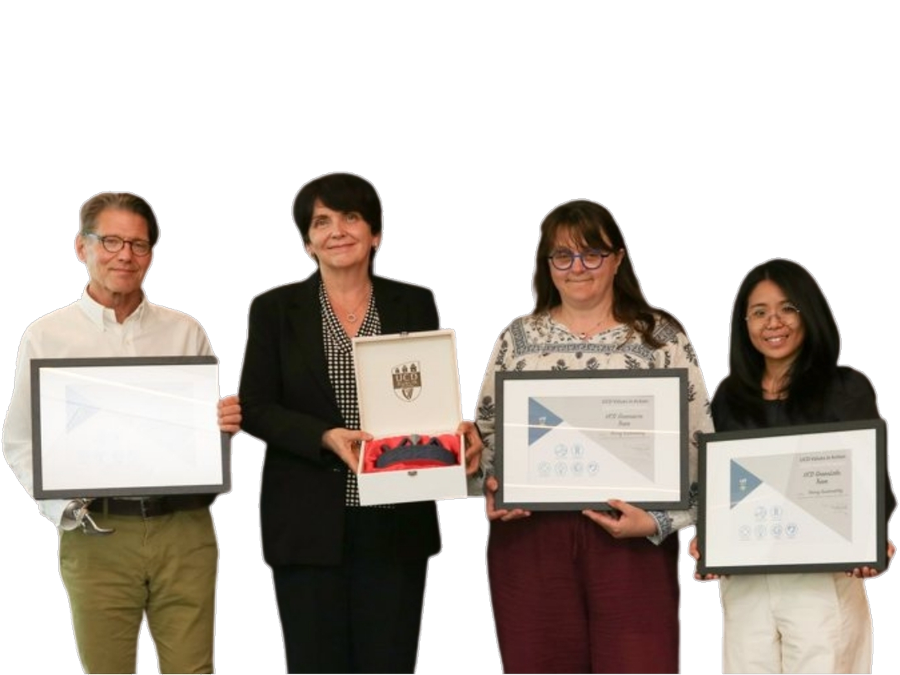
In May 2026 the Greenacre team received a Values in Action award from the President of UCD, Professor Orla Feely, for the work on the site.
The award is nominated by peers. Colleagues from across the university put the team forward — which is a different thing from a unit being commended by its own management.
None of the preceding pages was done alone. Whatever Greenacre is now is the product of a small team’s collective creativity, and the recognition belonged to all of it.